
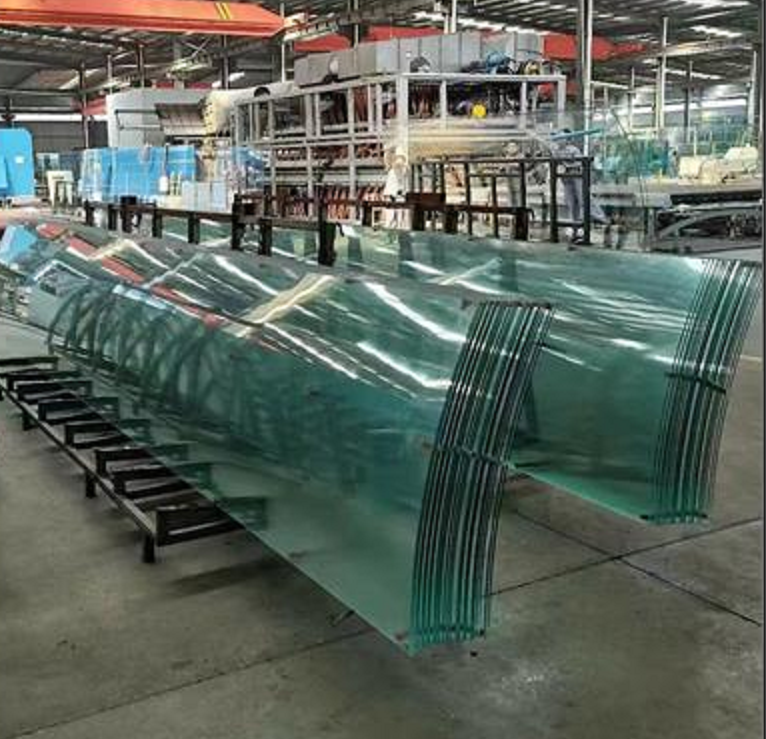
Out on the line, a crack in the annealing lehr doesn’t just kill one sheet. It eats raw material, ties up furnace time, and knocks your throughput off rhythm. Glass cracks in annealing when thermal stress gets trapped—uneven heating or cooling, convection that’s out of balance, or a heating module that can’t hold setpoint across the whole load. You see the fallout in the parts: edge checks, corner fractures, and flatness that’s out of spec and comes back after cutting. What matters, technically We build heating for glass plants around controllable heat input and temperature profiles you can count on, shift after shift. In bending, quartz short-wave infrared puts energy straight into the glass surface with low thermal inertia, so the hot junction follows the contour without overshooting. In tempering and lamination preheat, medium-wave elements lay down a broader, more even thermal field, which cuts down hot spots that drive localized expansion. The real spec isn’t just watt density. It’s emissivity matching, response time, and stable output through 24/7 running. Why this hits the problem where it lives This goes straight at the root of annealing cracks: unmanaged thermal stress. In hot bending, you get sag control that repeats, and fewer rejects from edge tension. In tempering, uniform preheat lowers the risk of fracture when you hit the quench. In EVA/SGP/PVB lamination and coating drying, controlled ramp-up and hold reduce bubbles, haze, and pinholes—those issues that can mask stress that shows up as a crack later in the lehr. The payoff is higher first-pass yield, fewer line stops, and less energy per square meter because heat is delivered when you need it, not dumped into the frame. Here’s the install reality: it’s a straightforward drop-in module, but the oven or lehr has to have solid thermal insulation and consistent airflow. If it doesn’t, even accurate heaters are fighting convection imbalance. Match the element choice to glass thickness and cycle time. Thin glass needs faster response. Thick glass needs deeper penetration. Plan on routine inspection of terminations and reflectors. In dirty environments, a thin film buildup can shift emissivity and force recalibration.