
Why Consistency in Your IR Lamps Stops the Headache of Batch Variance
Ever feel like you’re fighting your own equipment? One batch of glass comes out perfect. The next? It’s a nightmare. You start seeing shards cracking during cooling or failing QC because the optics are just off. Most of the time, this comes down to heat. Not just “is it hot enough,” but is it hot everywhere? A 5% difference in heat between two lamps doesn’t sound like a big deal on a spec sheet. But in the real world, that tiny gap creates internal stress in the glass. And stress is what kills your yield.
The Nitty-Gritty of the Heat
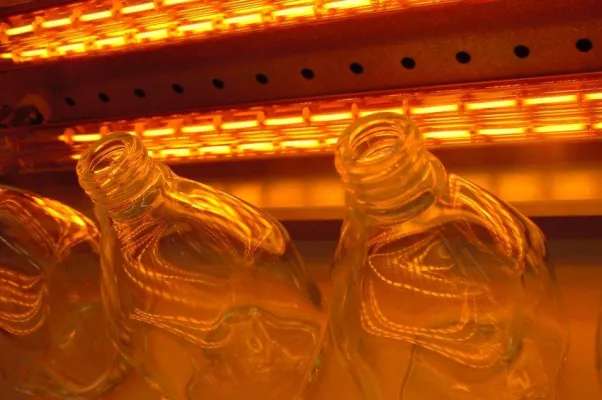
Here is the thing about the physics: it all comes down to the tiny details. If the filament inside the lamp is off-center by a fraction of a millimeter, the heat shifts. You get these annoying “hot spots” and “cold spots” across the glass. It’s frustrating because you can’t see it happening, but the glass definitely feels it. When you use lamps with tight tolerances, everything just… works. Every tube in your array puts out the exact same amount of juice. The best part? You can stop chasing your tail with PID tuning. You set your temperature profile once, lock it in, and actually trust that the next batch will look exactly like the last one.
Getting the Distance Right
Now, you can’t just plug them in and hope for the best. You have to find the “sweet spot” between power and distance. If you mount the lamps too close, you’re risking surface melting or actually burning the glass. But if you push them too far back, you won’t hit that annealing point fast enough to be efficient. If you’re running high-output shortwave lamps, they hit the target fast. Really fast. But that means you have to be strict about the gap to avoid thermal shock.
One Last Catch
There is a trade-off, though. High-consistency lamps are precision tools, which means they’re sensitive. If you wire them into a power grid that fluctuates, the quality of the lamp doesn’t even matter. You’re just fighting the electricity. To actually get the performance you paid for, you need a stable power supply. Keep the feed clean, and the hardware can finally do its job without any surprises.